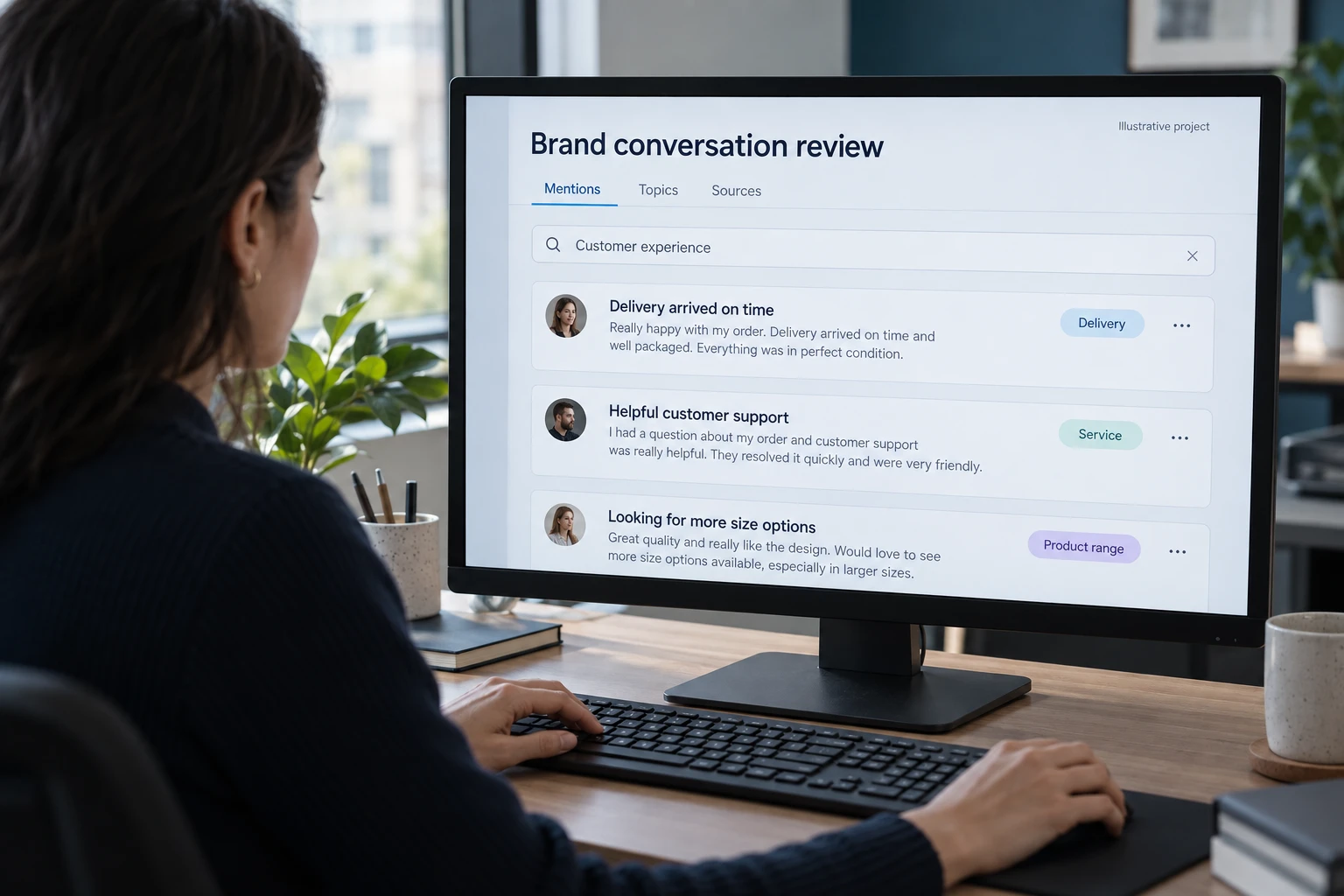
From question to useful output
Your question
Define the audience and the decision.
The right approach
Agree on scope and specialist support.
Clear findings
Review the evidence in context.
Your next step
Use the output to inform your work.
Define the conversations you want to understand
Set the brands, topics, competitors, languages and time period that matter to your question. Include likely spelling variations and ambiguous terms. A useful scope helps distinguish relevant discussion from unrelated content.
Read sentiment with care
A positive or negative label alone does not explain a conversation. Look at the reasons behind the sentiment, the topic being discussed and the surrounding context. Humour, slang and mixed-language comments can need closer interpretation.
Keep comparisons consistent
When comparing brands, use a consistent period and scope. Consider whether a campaign, product launch or isolated event could affect the discussion. The volume of online mentions is a measure of the conversations captured, rather than a direct measure of sales or the opinions of every customer.
Turn findings into further questions
Social listening can help identify recurring concerns or emerging topics worth investigating. It can also inform a discussion guide or communication brief. Public conversations complement other research and should be interpreted within their collection limits.